Everyone sounds good in 2026. That's not your edge anymore.
Contents
You've been at this a few years now. Your kicks hit, your mixes sound clean, you can tell a cheap reverb from an expensive one. On paper you're miles better than three years ago. And you're roughly where you started.
I've been there. The reason is annoying: your skill was never the bottleneck.
The skill curve got flat
Ten years ago, a clean mix was a statement. Now it's the price of entry. There's a tutorial for everything, sample packs that do half the work, presets that sound like radio out of the box, and AI that strips noise and splits stems while you go get coffee.
So thousands of people can build a club-ready track today. Not a handful. Thousands. Talent didn't lose its value. It just stopped setting you apart on its own.
Sounds bleak. It isn't. It just means the fight moved somewhere else.
The unsexy part nobody posts about
Picture two producers, same level. One gets the artist back, the other doesn't. It's not the mix, both mixes are good.
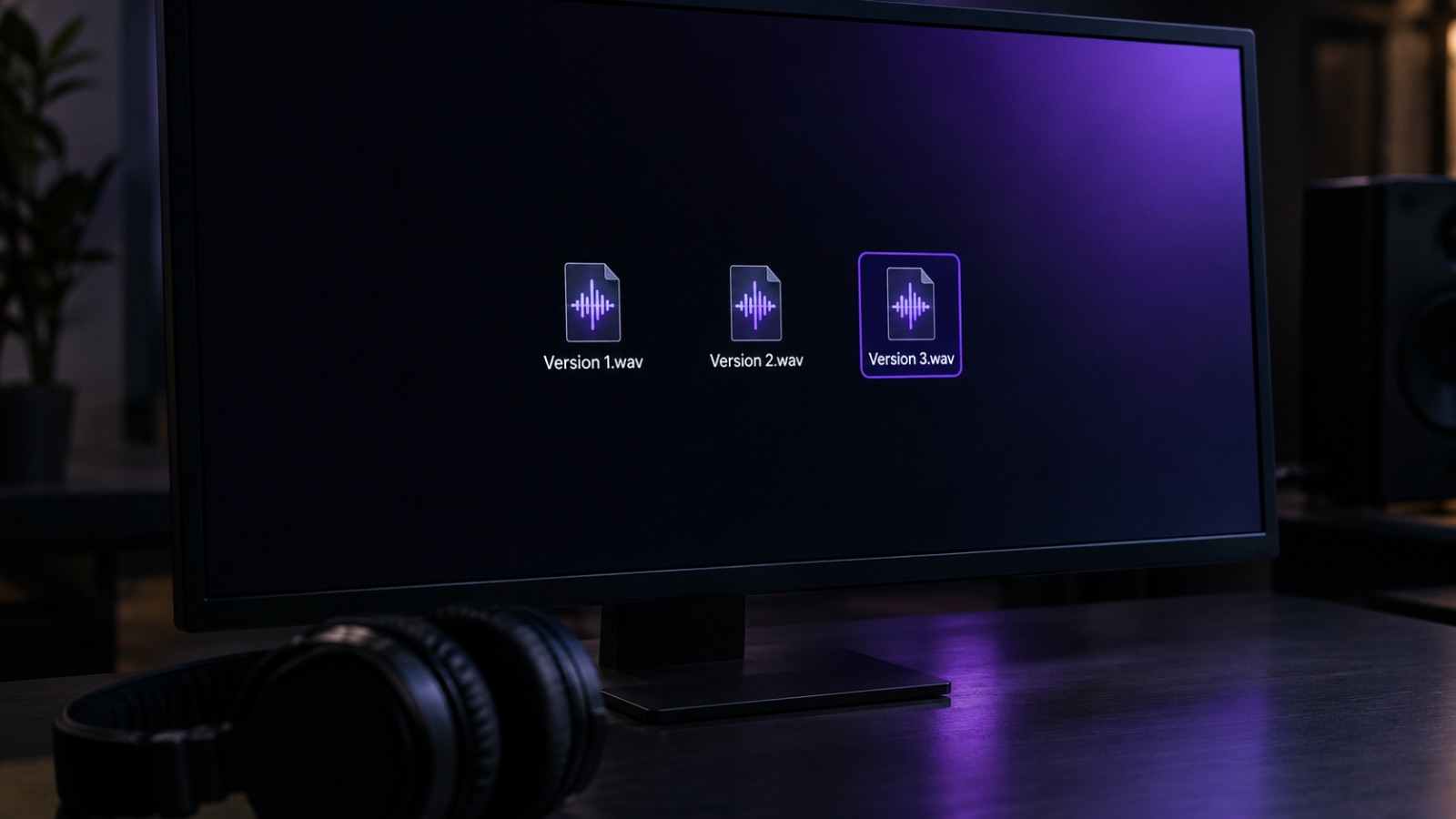
The difference is the thing nobody makes a reel about. When the artist writes "can you jump back on that track?", one of them knows instantly which version is current, what the artist wanted last time, and exactly where. The other is scrolling three weeks of WhatsApp voice notes, hunting for the right file somewhere between "Mix_final", "Mix_final_2" and "Mix_final_forreal".
The first one feels like collaborating. The second one feels like work.
That's not a creative skill. It's a system. And in 2026 that's where it gets decided who stays in the game.
And it's always the same stuff: credit and payment that never got properly agreed on. Clients who can't tell you what they want, then flip the whole thing three days before deadline. Revisions with no end. None of that gets fixed by a better plugin.
Talent is the ticket in. The system is everything after.
Don't get me wrong: the sound has to be there. Produce badly and you don't get in the room. But "produce well" only gets you to the door. What counts inside is whether people like working with you, whether you actually finish, whether you're still here in a year and not fried.
The people breaking through right now plan in years, not months. They build a few income streams early and take slower growth in exchange for control. That's not romantic, it's the realistic version. The shortcut that used to work is gone.
I built CuePort against exactly this wall. I was the second producer up there, scrolling WhatsApp for the right version. At some point it was obvious my bottleneck was never the producing, it was all the stuff around it: which track sits where, which note belongs to which spot, what's still open. So I built the system I wished I had. CuePort is my attempt to get that unsexy part out of the way so the time goes back into actually producing.
Good sound is the baseline in 2026. What you build on top of it is the thing that decides.
Full disclosure
I build CuePort, a studio-management platform for producers, so this piece isn't exactly neutral. I still wrote it the way I actually see it: the producing was never my problem, the stuff around it was. If your bottleneck is something else, skip the plug and keep the rest.
Frequently asked questions
Is good production still enough to stand out in 2026?
It's the requirement, not an edge on its own anymore. Tools, tutorials, and AI have lowered the technical bar, so a huge number of producers can turn out clean tracks. The real difference now is organization, reliability, and being able to keep your projects and clients under control.
What does "systems over talent" actually mean?
It means everything that isn't the track itself: how you manage versions and feedback, how clear your agreements with clients are, how you handle deadlines and revisions, and how you make people want to come back. That's where most producers fall short, more than on the sound itself.
How do I start building better systems in the studio?
Start small, at whatever hurts most right now. Usually that's versions and feedback: one naming convention you stick to, one place for your files instead of three, and feedback that sits on the spot in the track it refers to. That takes more pressure off than any new plugin.
What do music producers most often fail at?
Rarely the sound. More often organization and collaboration: fuzzy agreements about credit and payment, clients who blow things up late, version chaos, and burnout from endless revisions. Those are structural problems, not creative ones.